
Elevate Your Roof
Elevate Your Roof
Integrating unique elements into ceramic tile roofs requires careful planning, the use of appropriate materials, and a thorough understanding of construction systems. Poor execution can lead to leaks, structural failures, or a shorter roof lifespan.
In this article, we'll explore the main problems that can arise in this regard. We'll also see what you can do to prevent damage and how the tile world enables a secure, durable, and aesthetically pleasing integration.
How to avoid common problems when installing chimneys, skylights and vents in ceramic roofs
The installation of chimneys, skylights and outlets in ceramic roofs requires precise execution, since these elements break the continuity of the roof and can compromise its watertightness if they are not integrated correctly.
The three most common mistakes are:
– Poorly resolved joints
– Lack of adaptation to expansion and movement
– Use of standard solutions for specific elements
To avoid these problems, it is essential to apply good installation practices : use flashing and fittings compatible with the roof slope, include expansion joints, and employ solutions specifically designed for each type of element. This ensures a safe, functional, and durable finish, even in demanding weather conditions.
Best practices for integrating unique elements
To avoid problems in the future, you must follow a series of technical recommendations that guarantee compatibility with the ceramic tile, the watertightness of the roof and the durability of the entire system.
How to properly waterproof chimneys and ventilation outlets
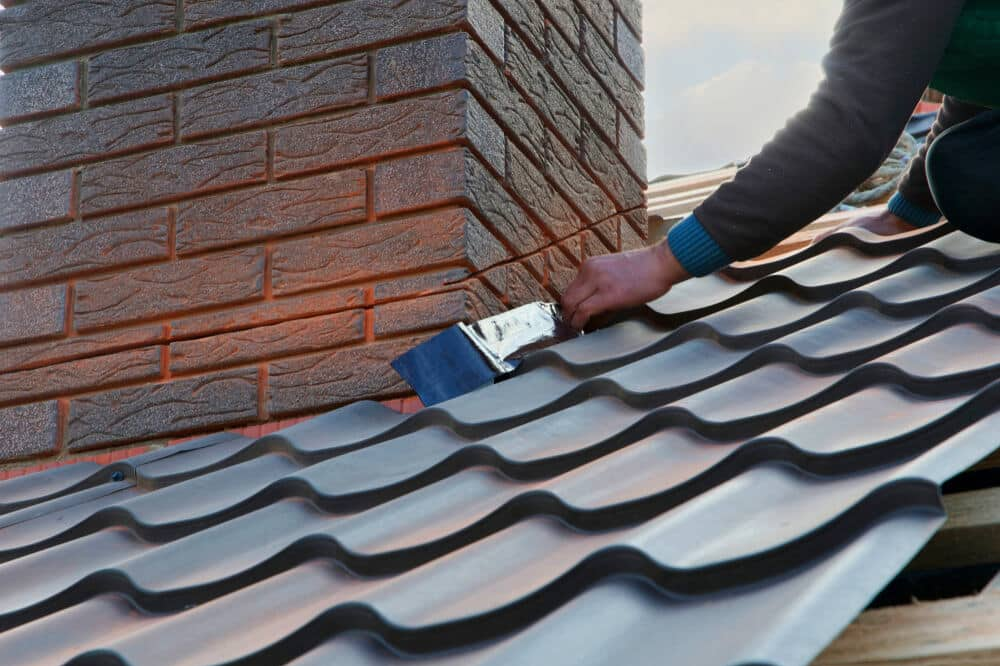
For chimneys, the best option is to use metal flashing or moldable waterproof sheets that conform to the contours of the base and overlap the tiles. These should be installed at an angle that allows for water drainage and does not obstruct the gutters.
For ventilation outlets , there are specific ceramic tile pieces that facilitate a clean and safe integration without compromising the aesthetics of the roof.
Technical recommendations for skylights and roof windows
Skylights must be installed with a watertight frame and overlapping valances. Ideally, flexible, UV-resistant materials should be used. The base of the skylight should be raised sufficiently above the roof level to prevent water accumulation.
In the case of roof windows , you must always follow the manufacturer's instructions and use installation kits and accessories that are compatible with the ceramic tile.
Installation of antenna supports and auxiliary elements without damaging the roof
Any perforation in the roof poses a significant risk. Therefore, supports for antennas, solar panels, or other accessories must be attached to independent structures. Anchors specifically designed for pitched roofs can also be used. Ideally, these installations should be planned from the outset of the project to allow for reinforcement without compromising the roof's integrity.
Integration of unique elements with the tile world® installation system
The Tile World from Tejas Verea is the most complete solution for ceramic tile roofs . It's based on an installation system that improves ventilation, simplifies assembly, and ensures a longer-lasting watertight seal. This system allows for the secure integration of unique elements into ceramic tile roofs thanks to its specific components, including waterproof membranes, anchors, and compatible accessories.
Furthermore, the Tile World is intended to easily adapt to chimneys, roof windows, or ventilation outlets. The uniformity of the roof and its aesthetics will not be compromised at any time. Maintenance or replacement of parts can be carried out quickly and without risk to the overall roof structure.